419, Hanuman Nagar Extn., Khatipura, Jaipur +91 88247 36742 lokeshyadav1984@gmail.com
Dr. Lokesh Yadav

Heller’s Cardiomyotomy Surgery Surgeon in Jaipur

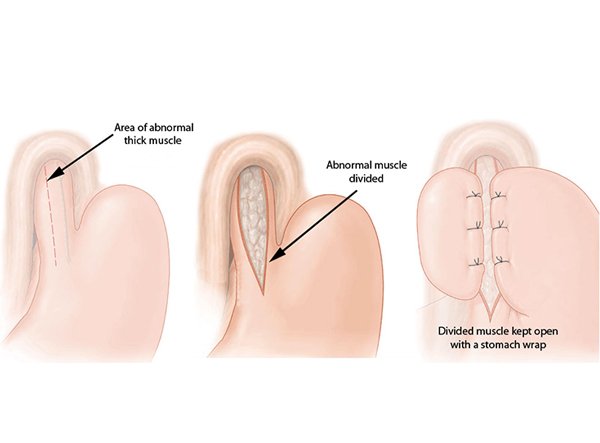
This is an operation for achalasia of the cardia, a condition in which the muscle in the lower oesophagus fails to relax and therefore hinders the passage of food and fluid into the stomach. Treatment with Botox injections or balloon dilatation of the affected part of the oesophagus can be attempted but are often short-lived and surgery is frequently required as a more lasting solution.

Under general anaesthesia, 5 small keyhole incisions are made on the abdomen and laparoscopic instruments are introduced. The lower oesophagus is approached and a lengthwise cut is made in the muscle layer of the lower oesophagus. Care is taken to cut only the muscle layer, leaving the inner lining of the oesophagus intact. As this procedure is often complicated by acid reflux after the operation, a partial or complete fundoplication is also performed at the same time to minimise this.

Intake of food should become more comfortable soon after surgery and a near-normal diet can be maintained.

Frequently Asked Questions

Heller's Cardiomyotomy is a surgical procedure used to treat achalasia, a condition in which the lower esophageal sphincter does not relax properly, making it difficult for food and liquids to pass into the stomach. The procedure helps improve swallowing by dividing the tight muscle fibers at the lower end of the esophagus.

Heller's Cardiomyotomy may be recommended for patients diagnosed with achalasia who experience difficulty swallowing, regurgitation of food, chest discomfort, or weight loss. The decision depends on the severity of symptoms and the results of diagnostic evaluation.

Achalasia is a swallowing disorder that affects the esophagus. It occurs when the lower esophageal sphincter fails to relax normally, making it difficult for food and liquids to move into the stomach. Common symptoms include difficulty swallowing, regurgitation, chest pain, and weight loss.

Yes. In many patients, Heller's Cardiomyotomy can be performed using a minimally invasive laparoscopic approach. This technique uses small incisions and specialized instruments, which may help reduce postoperative discomfort and support recovery.

The doctor may recommend investigations such as upper GI endoscopy, barium swallow studies, esophageal manometry, and other relevant tests to confirm the diagnosis of achalasia and plan the most appropriate treatment.

Heller's Cardiomyotomy can provide long-term relief from swallowing difficulties in many patients. However, the long-term outcome varies from person to person, and some patients may require follow-up evaluation or additional treatment in the future.

The procedure is intended to improve swallowing and reduce symptoms associated with achalasia. Many patients experience significant relief in swallowing difficulties and improved quality of life following treatment.

Heller's Cardiomyotomy is a well-established surgical procedure, but like any surgery, it carries potential risks. The risks and benefits depend on the patient's health, the severity of the condition, and the type of procedure performed. A detailed consultation is important before treatment.

Recovery varies depending on the patient's overall health and the surgical approach used. Your surgeon will provide specific guidance regarding diet progression, physical activity, medications, and follow-up care after the procedure.

You should consult a specialist if you experience persistent difficulty swallowing, regurgitation of food, unexplained weight loss, chest discomfort, or other symptoms suggestive of an esophageal disorder. Early evaluation can help identify the cause and determine the most appropriate treatment.
WhatsApp