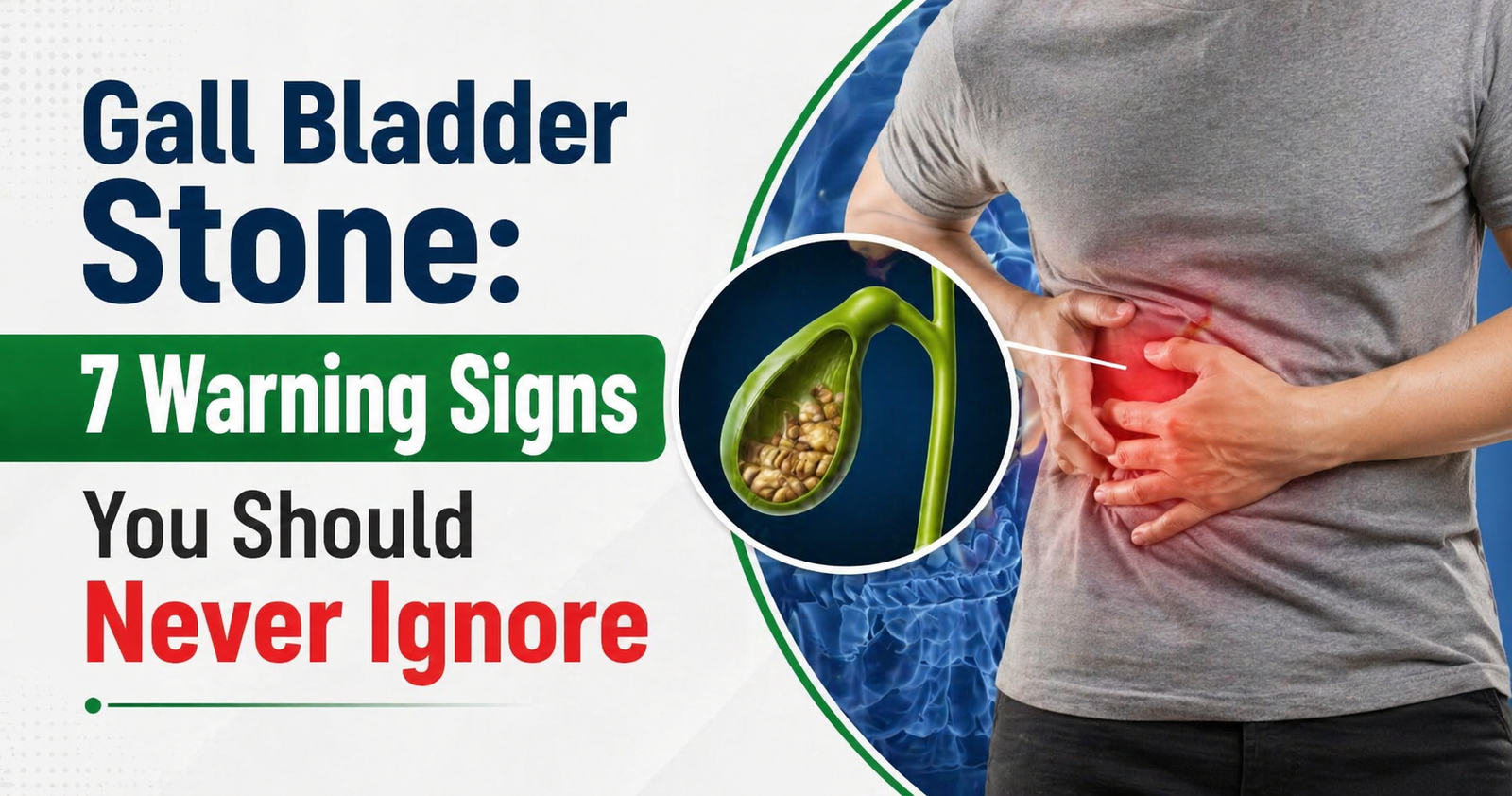
The human body is a complex mechanism and a machine just as any machine, it also has its means of telling you that there is something wrong. Gallstones are one of the most widespread, but frequently neglected problems. Whereas there are individuals who live with them for years without any single symptom, in some cases, they may cause life threatening complications and excruciating pain. It is crucial to know the early signs to seek early treatment with a top gall bladder stone surgeon.
What is a Gall Bladder Stone?
A small pear-shaped organ which is just below the liver is called the gallbladder. Its main task is to hold bile, which is a fluid produced by the liver, which assists in the digestion of fats. Cholelithiasis (gallbladder stones) are concretions of digestive fluid which may develop in this organ.
These stones may be as small as a grain of sand or as big as a golf ball. There are two types of them:
- Cholesterol stones: This is the most frequent type which is usually yellow and is mainly made up of cholesterol which has not been dissolved.
- Pigment stones: Dark brown or black stones, which are formed when your bile has an excessive amount of bilirubin.
7 Warning Signs of Gall Bladder Stone
Neglecting the symptoms of gallstones may result in inflammation (cholecystitis), jaundice or even pancreatitis. The seven symptoms mentioned above are reasons why you need to seek the help of a specialist in the field of surgery of gall bladder stones.
1. Sudden Pain in the Upper Right Abdomen
A gallbladder attack is characterized by biliary colic. It is an acute, rapidly growing pain in the upper right of your abdomen. This pain is deep and constant as opposed to a normal stomachache. It usually happens when a stone obstructs the cystic duct making the gallbladder contract violently against the blockage.
2. Pain After Eating Fatty Foods
The gallbladder is meant to empty the bile and dissolve fats therefore when one eats a heavy, greasy, or fried meal, the organ overworks. This contraction could cause a lot of pain or sharp pains in the event that there is a stone and this happens soon after you have attended to your meal.
3. Back or Shoulder Pain
Surprisingly, the pain in the gallbladder does not necessarily remain in the stomach. Referred pain is reported by many patients. You may have a sharp pain between your shoulder blades or a sharp pain in your right shoulder. This is due to the fact that the nerves to the gallbladder are the same nerves that serve the spinal cord and that of the back and shoulder.
4. Excessive Vomiting and Nausea
Although many digestive problems result in nausea, chronic vomiting with abdominal pain is a significant warning of gallstones. This usually happens to the body in response to the inflammation or obstruction of the biliary system.
5. Bloating and Gas
Chronic indigestion, burping, and a feeling of fullness (bloating) are common “silent” signs. Although they are usually disregarded as mere acid reflux or gas, they may be a sign of the gallbladder not performing effectively because of the occurrence of the stones.
6. Fever with Chills
When you get a fever and abdominal pain, it most likely means that you have an infection (acute cholecystitis) or that the common bile duct is blocked up. This is a medical emergency. A fever is an indication that the bacteria are multiplying in the trapped bile and it has to be taken care of by a surgeon.
7. Yellowing of Skin or Eyes (Jaundice)
When a gallstone is not removed out of the gallbladder and lodges in the common bile duct, it hinders the movement of bile into the bowels, thus resulting in jaundice. This leads to a build-up of bilirubin in the blood stream and the skin and whites of the eyes turn yellow.
What Causes Gall Bladder Stones?
Doctors think that gallstones can occur when:
- There is too much cholesterol in your bile: As a rule, bile has sufficient chemicals to dissolve the cholesterol that is secreted by your liver. In case of excess of liver excretion which can be accommodated by the bile, the surplus crystals are converted into stones.
- Excess bilirubin in your bile: Some of your liver lithographs, such as liver cirrhosis or blood diseases, are causing your liver to produce too much bilirubin.
- The emptying of the gallbladder is incorrect: When bile is excessively concentrated, it is also the cause of stones.
Who is at Risk?
There are factors that predispose to the development of the gallstones, commonly known as the Four Fs: Female, Forty, Fat and Fertile.
- Gender: Women have higher chances of developing stones because of estrogen that elevates cholesterol in the bile.
- Age: There is a high risk after the age of 40.
- Weight: Obesity or being overweight is one of the major risk factors.
- Diet: High fat and refined carbohydrate, low fiber diets.
- Sedentary Lifestyle: Physical inactivity may slow down emptying of the gallbladder.
How is It Diagnosed?
A doctor will normally employ the following in case he or she suspects that you have gallstones:
- Abdominal Ultrasound: The simplest and the least invasive procedure to see stones.
- CT Scan: This scan shows the detailed picture of the organs to determine the presence of complications.
- HIDA Scan: A nuclear scan that follows bile flow.
- Blood Tests: To monitor infection or jaundice or pancreatitis.
Treatment Options
1. Medication
There are rare instances when drugs such as ursodeoxycholic acid are able to dissolve small cholesterol stones. Nevertheless, it may require months or years, and the stones tend to be recurring after the discontinuation of the medication.
2. Surgery
The gold standard of symptomatic stones is surgery of the gall bladder stone (cholecystectomy).
- Laparoscopic Cholecystectomy: The surgeon incises small holes into the abdomen and a camera is used to take out the gallbladder. It provides a rapid recuperation.
- Open Surgery: It is applied in case of gross inflammation or scarring of the gallbladder.
3. Lifestyle Changes
In the case of the silent stones (no symptoms), doctors might advise a diet of low fat, gradual weight loss, and higher intake of fiber so that the stones do not grow out or create a blockage.
Tips to Prevent Gall Bladder Stones
- Eat regularly: Fasting or missing meals may lead to the bile standing and pooling.
- Weight loss gradually: Rapid weight loss (greater than 1-2 kgs/week) may in fact increase the occurrence of stones.
- Eat more fiber foods: Eat more fruits, vegetables, and whole grains.
- Keep a normal weight: Obesity makes more cholesterol to be in your bile.
When Should You See a Doctor?
You must see a doctor immediately in case you have:
- Such pain in the stomach that you are not able to sit and relax.
- Fever and chills.
- Yellowing of the skin or eyes.
FAQs
1. What are the first signs of gall bladder stone?
The first one is the so-called biliary colic, which is a sharp pain that is located in the upper right abdomen and can last between 30 and several hours.
2. Can gall bladder stones go away without surgery?
Generally, no. Although there are also silent stones that do not present any problems, when they begin to cause pain, they normally demand surgical removal of the gallbladder.
3. Is gall bladder stone dangerous?
Yes, when they are not treated, they may lead to the rupture of the gallbladder, acute infection, or pancreatitis, which can be life-threatening.
4. What foods should be avoided in gall bladder stone?
Foods that cause contractions in the gallbladder include high fat, fried food, rich creams, fat meat, and high-processed snacks.
5. How long does gall bladder surgery take?
A standard laparoscopic cholecystectomy lasts between 45-90 minutes. The majority of patients are discharged on the same day or the next morning.