
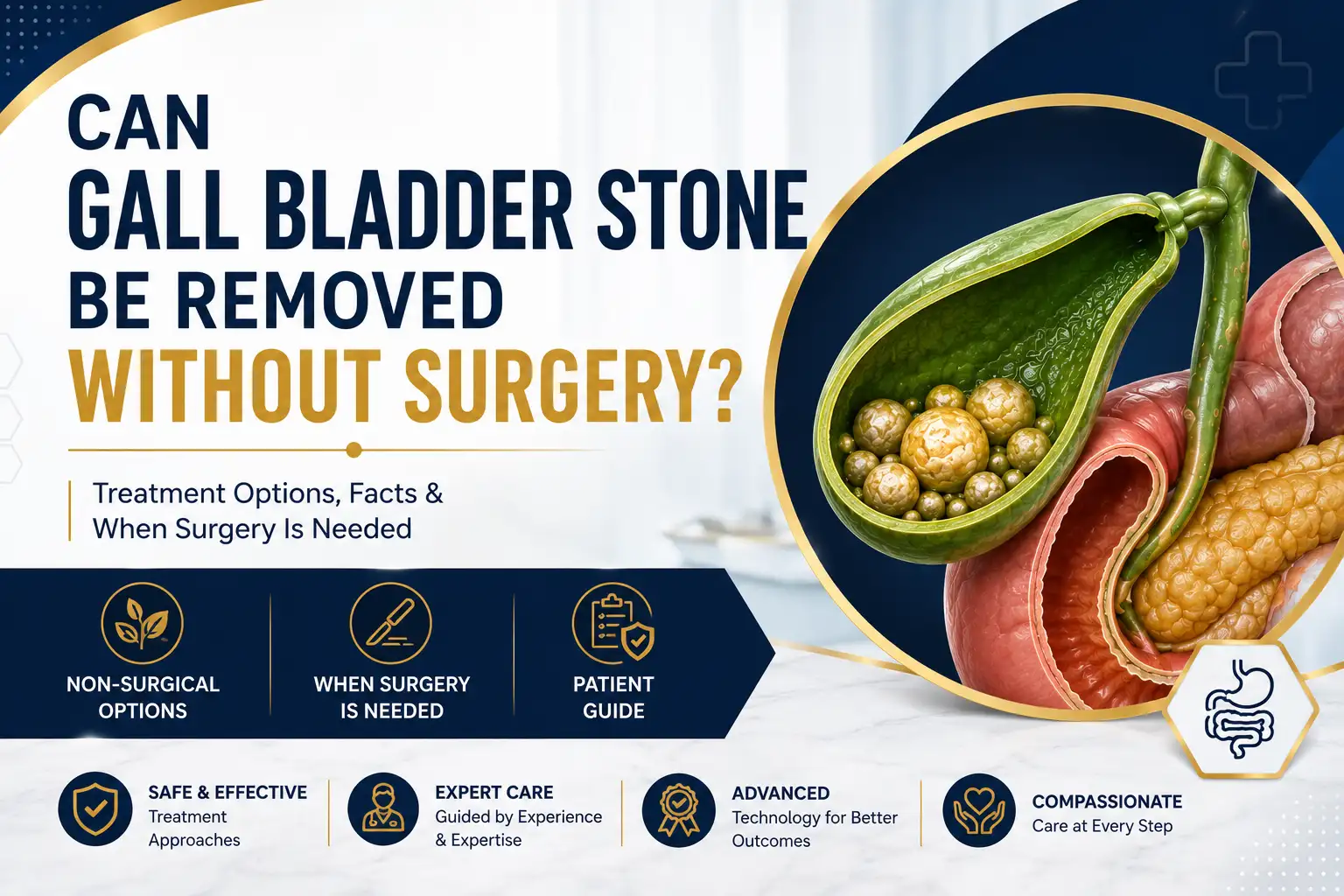
Can gall bladder stone be removed without surgery? This is one of the most common questions patients ask after an ultrasound confirms gallstones. The answer is yes, but only in certain situations. Small cholesterol-based gallstones that are not causing symptoms may sometimes be monitored or treated with medicines. However, non-surgical treatment is usually suitable only for selected patients and does not always provide a permanent solution.
If gallstones cause repeated pain, infection, jaundice, pancreatitis, or bile duct blockage, surgery is often the safest and most effective treatment. The right approach depends on the stone type, symptoms, size, and overall health of the patient, which is why consultation with an experienced Gall Bladder Stone Surgeon is important before deciding on treatment.
Medically Reviewed Information
This article is intended for patient education and explains common gallbladder stones treatment options in simple language. The content has been medically reviewed by Dr. Lokesh Yadav, Surgical Gastroenterologist and GI Surgeon, who specializes in gastrointestinal, hepatobiliary, pancreatic, and laparoscopic surgery.
What We Commonly See in Clinical Practice
Many patients first try home remedies, dietary changes, or over-the-counter medications because they want to avoid surgery. While some patients with silent gallstones may not require immediate treatment, those experiencing repeated pain, fever, jaundice, vomiting, or bile duct blockage should not delay medical evaluation. According to the clinical experience of Dr. Lokesh Yadav, Surgical Gastroenterologist and GI Surgeon associated with CKS Hospitals, Jaipur, timely diagnosis and appropriate treatment can help prevent complications and improve long-term outcomes for patients with gallbladder stones.
Who May Be Able to Avoid Gallbladder Surgery?
Not every gall bladder stone needs immediate operation. Some patients may avoid or delay surgery if the stone is not causing symptoms and there are no signs of infection or blockage.
Silent Stones
Gallstones found accidentally on ultrasound may not need immediate treatment if there are no symptoms.
Small Cholesterol Stones
Some small cholesterol stones may respond to bile acid medicines, but treatment is slow.
High-Risk Patients
Non-surgical options may be considered when surgery is risky due to serious health conditions.
Why Do Gall Bladder Stones Occur?
Gallbladder stones form when bile becomes imbalanced. Bile is a digestive fluid that helps break down fats. When bile contains too much cholesterol, too much bilirubin or the gallbladder does not empty properly, crystals can form and slowly become stones.
Common Gallbladder Stones Reason
- Excess cholesterol in bile
- Excess bilirubin
- Poor gallbladder emptying
- Obesity or rapid weight loss
- Pregnancy
- Diabetes
- Family history
- High-fat diet
Symptoms of Gallbladder Stones
Some gallbladder stones cause no symptoms. These are called silent stones. But when stones block bile flow or irritate the gallbladder, symptoms can appear suddenly, often after oily or heavy meals.
- Upper right abdominal pain
- Pain spreading to the back or right shoulder
- Nausea or vomiting
- Bloating or indigestion
- Fever or chills
- Yellow eyes or skin
- Dark urine or pale stool
If you are searching for gallbladder stones symptoms removal, remember that pain medicines may give temporary relief, but they do not remove the stone.
Can Gall Bladder Stone Be Dissolved?
Yes, some gallbladder stones can be dissolved, but this does not work for every patient. Medicines such as ursodiol or chenodiol may help dissolve small cholesterol stones. These medicines work slowly and may take several months or even years. They are generally ineffective for pigment stones, calcified stones, or larger stones.
Can Gall Bladder Stone Be Removed by Medicine?
In selected cases, medicine may help dissolve small cholesterol-based gallstones when the gallbladder is functioning normally. However, medicines do not work for all stone types and are usually not recommended for patients with repeated pain, infection, bile duct blockage, or other complications. Even when medicines are successful, gallstones may return after treatment is stopped.
Non-Surgical Options for Gallbladder Stones Treatment
In certain situations, gallbladder stones treatment without operation may be considered. The most appropriate option depends on the type of stone, symptoms, gallbladder function, and the patient’s overall health. While non-surgical methods may help selected patients, they are not suitable for everyone and may not provide a permanent solution.
| Option | When It May Help | Limitations |
|---|---|---|
| Oral Dissolution Therapy | Small cholesterol stones | Slow, may take months or years; recurrence possible |
| ESWL / Shock Wave Therapy | Rare selected cases | Not commonly used for gallbladder stones |
| ERCP | Stone stuck in common bile duct | Does not remove stones inside gallbladder |
| Diet & Lifestyle | Symptom control and prevention support | Cannot reliably dissolve existing stones |
It is important to understand that non-surgical treatment is generally reserved for selected patients. Medicines may help dissolve small cholesterol stones, while ERCP is mainly used when a stone blocks the bile duct. Dietary changes can help reduce symptoms and support gallbladder health, but they are not proven to remove existing stones. Patients with repeated pain, infection, jaundice, or complications often require a more definitive treatment approach.
Treatment Comparison: Non-Surgical Treatment vs Surgery
Many patients wonder whether gallbladder stones can be managed without surgery or if an operation is ultimately the better option. The answer depends on symptoms, stone type, complications, and overall health. The table below compares situations where observation or medical management may be considered versus cases where surgery is commonly recommended.
| Situation | Non-Surgical Treatment | Surgery |
|---|---|---|
| Silent gallstones | Often observation is possible | Usually not required immediately |
| Small cholesterol stones | Medicine may be considered | Depends on symptoms |
| Repeated pain attacks | Usually temporary relief only | Often recommended |
| Infection or inflammation | Not sufficient alone | Often needed |
| Bile duct blockage | ERCP may remove duct stone | Gallbladder surgery may still be advised later |
Many patients wonder whether gallbladder stones can be managed without surgery or if an operation is ultimately the better option. The answer depends on symptoms, stone type, complications, and overall health. The table below compares situations where observation or medical management may be considered versus cases where surgery is commonly recommended.
When Gallbladder Stones Need Urgent Medical Attention
Do not ignore warning signs. If you are experiencing persistent abdominal pain, fever, jaundice, or other symptoms, it is important not to ignore them. Learn more about the warning signs of gallbladder stones that may require prompt medical attention.
What to Eat in Gall Bladder Stone?
A gall bladder stone patient diet should focus on low-fat, high-fiber and digestion-friendly foods. Diet can support symptoms, but it cannot remove stones already formed.
- Fresh fruits and vegetables
- Whole grains
- Lentils and beans
- Low-fat curd
- Lean protein
- Plenty of water
What Not to Eat in Gall Bladder Stone?
- Very large meals
- Fried food
- Heavy oily meals
- Fast food
- Processed snacks
- High-fat dairy
- Red meat
What Size of Gallbladder Stone Needs Surgery?
There is no single size that automatically means surgery. A 2mm stone, 7mm stone in gall bladder, 17mm stone or gall bladder stone size 22mm should all be evaluated with symptoms and ultrasound findings. Small stones may sometimes slip into the bile duct, while larger stones may remain silent. The decision depends on symptoms, complications and medical evaluation.
When Is Gallbladder Stones Surgery the Better Option?
Gallbladder stones surgery is usually recommended when stones cause repeated pain or complications. The most common surgery is laparoscopic cholecystectomy, where the gallbladder is removed through small incisions. Doctors remove the gallbladder rather than only the stones because new stones can form again if the gallbladder remains.
Gallbladder Stones Treatment: How to Decide the Right Option?
The right gallbladder stones treatment depends on symptoms, stone size, stone type, number of stones, gallbladder function, bile duct involvement and overall health. Patients looking for safe evaluation can consult the Best Gastrointestinal Surgeon in Jaipur for gallbladder, digestive, liver, pancreas and bile duct-related concerns.
Need Expert Opinion for Gallbladder Stones?
If you have repeated pain, vomiting, fever, jaundice or ultrasound-confirmed stones, a timely consultation can help decide whether medicine, ERCP, observation or surgery is the safer choice. Book Consultation
Final Thoughts
Not all gallbladder stones require immediate surgery, and some patients may be managed without an operation depending on the type of stone, symptoms, and overall health. However, treatment decisions should never be based on stone size alone. Persistent pain, infection, jaundice, or bile duct blockage often require prompt medical evaluation. Understanding the available treatment options, seeking timely medical advice, and knowing how to choose a gastrointestinal surgeon can help patients make informed decisions and choose the safest and most effective approach for their situation.
Frequently Asked Questions
Can gall bladder stone be treated without surgery?
Yes, but only in selected cases. Small cholesterol stones or silent stones may sometimes be managed without surgery, while symptomatic stones often require treatment.
Can gall bladder stone be dissolved?
Some cholesterol-based stones may be dissolved with bile acid medicines, but the process is slow and may take months or years.
Can gall bladder stone be removed by medicine?
Medicines may help dissolve small cholesterol stones, but they are not effective for all stone types and are not suitable for every patient.
What dissolves gallbladder stones fast?
There is no proven fast method to dissolve gallbladder stones. Medical treatment, when suitable, usually takes several months.
What are the symptoms of gallbladder stones?
Common symptoms include upper abdominal pain, nausea, vomiting, bloating, fever, jaundice, and pain after fatty meals.
What to avoid in gall bladder stone?
Avoid fried foods, oily meals, processed snacks, high-fat dairy products, sugary foods, and overeating.
How gall bladder stone is removed?
Gallbladder stones may be treated with medicines in selected cases, but symptomatic stones are commonly treated through laparoscopic surgery.
Is 7mm stone in gall bladder serious?
A 7mm stone may or may not be serious. Symptoms, infection, blockage, and bile duct involvement are more important than size alone.
Is gall bladder stone size 22mm dangerous?
A 22mm stone requires medical evaluation. Large stones may remain silent but can sometimes cause pain, inflammation, or complications.
Can diet remove gallbladder stones?
A healthy gall bladder stone patient diet may help manage symptoms, but diet alone cannot reliably remove existing stones.
Can gall bladder stone cause cancer?
Gallbladder cancer is rare, but long-standing gallstones may increase the risk in some patients, especially when chronic inflammation is present.
Kidney stone and gall bladder stone: Are they the same?
No. Kidney stones form in the urinary system, while gallbladder stones form in bile. Their causes, symptoms, and treatment are different.
Can gall bladder stone be cured naturally?
There is no scientifically proven natural remedy that can safely dissolve existing gallbladder stones. Home remedies may help support digestion but should not replace medical advice.
How much does gall bladder stone surgery cost?
The cost varies depending on the hospital, city, surgeon’s experience, insurance coverage, and the type of procedure performed.
What happens if I don’t remove gallstones?
Some gallstones may remain symptom-free. However, untreated symptomatic stones can lead to infection, inflammation, jaundice, pancreatitis, or bile duct blockage.