
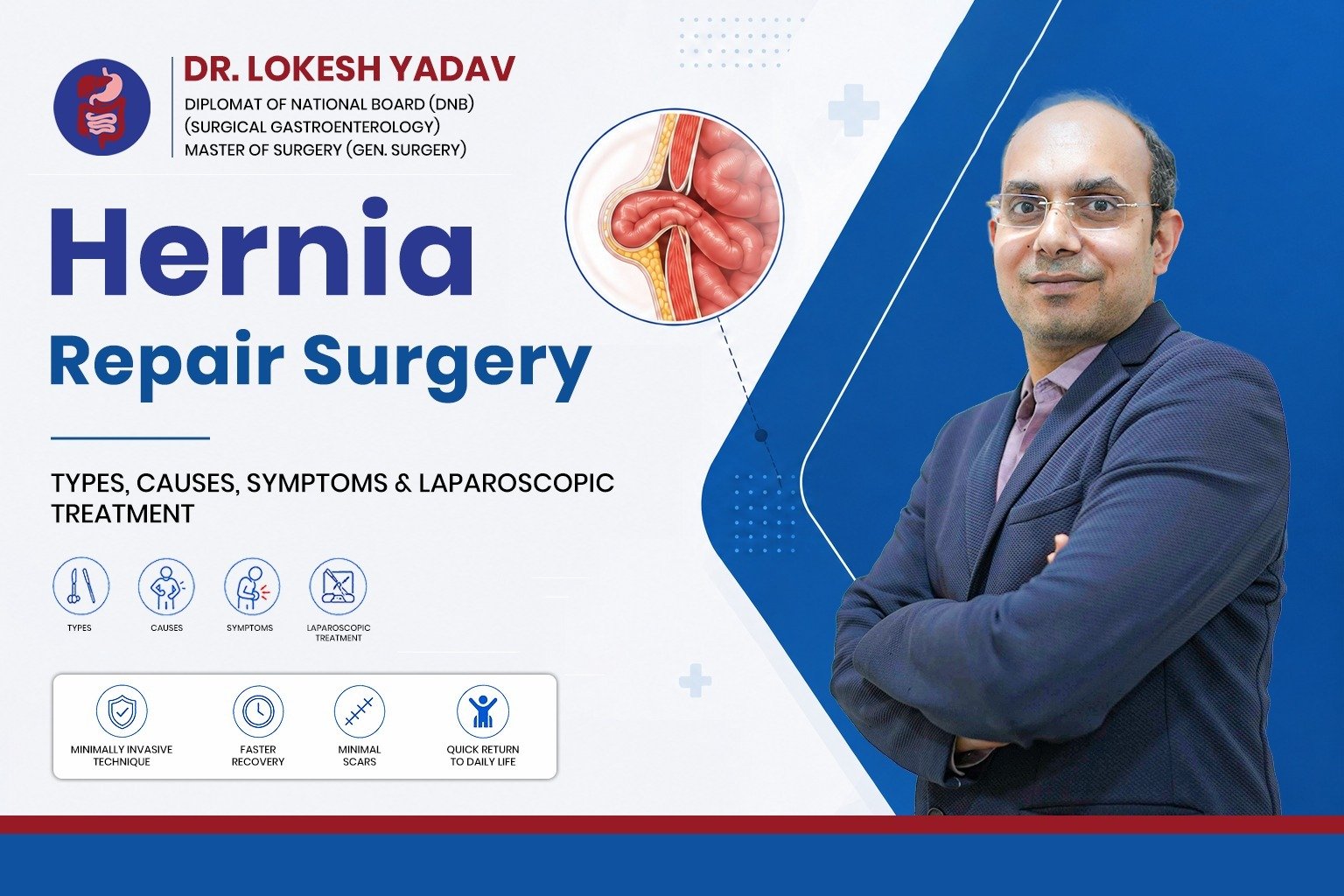
Can a hernia heal on its own without surgery? Unfortunately, the answer is no. Once a hernia forms in the body, the weak spot in your muscle walls stays open and may stretch wider over time. In this condition, a hernia repair surgery is the only way to close that gap and restore the strength of your muscle walls. Modern hernia repair surgery is minimally invasive, and it is often done through tiny keyhole incisions that let most patients go home the same day.
This guide explains what a hernia is, its types, causes, symptoms and treatment options. It also explains the approach of the best laparoscopic surgeon in Jaipur to cure this condition.
What Is a Hernia and When Is Surgery Needed?
Hernia refers to the situation where an organ or fat tissue moves through a weak spot or opening in the muscle tissue that holds the organ in place. This condition does not heal on its own and requires surgery when it causes persistent pain and there is a visible bulge beneath the skin.
How Does a Hernia Form?
Hernia develops gradually as the inner organs and tissues continue pressing against a weak area in the muscular wall. What patients tend to observe first is the visible bulge beneath the skin because of continuous pressure on that area.
Can a Hernia Heal Without Surgery?
A hernia cannot heal without surgery because it involves a weakness or defect in the abdominal wall. The human body cannot naturally rebuild or close a torn muscle wall the way it heals minor cuts.
What Are the Different Types of Hernia?
There are several hernia types and they are grouped by where they appear on the body. Here are the most common types of hernia:
| Hernia Type | Location | Common In |
| Inguinal | Inner groin | Men |
| Umbilical | Around the navel | Infants and postpartum women |
| Ventral | Abdominal wall | People with past surgical cuts |
| Hiatal | Upper stomach/diaphragm | Adults over 50 and pregnant women |
Inguinal Hernia
An inguinal hernia occurs when part of the intestine or fat pushes through a weak spot in the lower abdominal wall. This is the most common type of hernia.
Umbilical and Ventral Hernia
An umbilical hernia occurs when tissues bulge through a weak opening right at or near the navel area. Whereas a ventral hernia may form anywhere along the front wall of the abdomen. It mostly develops at the site of a previous surgical scar.
Hiatal Hernia (The Type With Different Symptoms)
A hiatal hernia occurs within the chest through the diaphragm and does not cause a visible bulge on your skin. The most common symptoms of this type of hernia are:
- Severe heartburn
- Acid reflux
- Chest discomfort
- Difficulty in swallowing
What Causes a Hernia?
A hernia occurs due to a combination of muscle weakness and physical strain. Here is a brief look at each cause of hernia.
Muscle Weakness and Previous Surgery Scars
Some people are born with thin spots in the abdominal wall, while others may develop them because the abdominal wall weakens with age. Previous operations also play a role, since scar tissue is weaker than healthy muscle. If you have a history of digestive problems / GI surgery, mention it during your consultation.
Heavy Lifting, Obesity and Straining
An increased pressure on the abdomen may cause a hernia. Some of the common causes include:
- Lifting heavy loads incorrectly
- Carrying excess weight
- Chronic coughing
- Repeated straining during constipation
What Are the Symptoms of a Hernia?
The main symptom of hernia is a visible bulge. Some other common hernia symptoms include:
Visible Bulge and Discomfort
The most common sign of hernia is a soft lump. It typically becomes more noticeable when you stand or lift something. In these situations, a diagnostic laparoscopy can confirm the condition.
Emergency Signs — When to See a Doctor Immediately
If tissue becomes trapped outside the muscle wall, it can become strangulated. This condition becomes a life-threatening medical emergency.
Doctor Insight: Emergency Warning Signs
Go to the nearest emergency room immediately if you experience:
- Sudden, severe pain at the hernia site
- A bulge that turns red, purple, or dark
- A lump that is hard, locked in place, and cannot be pushed back in
- Nausea and vomiting
- Inability to pass gas or have a bowel movement
Open vs Laparoscopic Hernia Surgery — Which Is Better?
Both open and laparoscopic surgery work well to treat a hernia. Here are some main differences between the Laparoscopic and open hernia surgery:
| Factor | Open Surgery | Laparoscopic Surgery |
| Incision | One large cut | Three small keyhole incisions |
| Pain | More | Less |
| Hospital Stay | 1 to 2 days | Often the same day |
| Recovery | 3 to 6 weeks | 1 to 3 weeks |
| Recurrence Rate | Slightly higher | Low with mesh |
Benefits of Laparoscopic Surgery
There are four main benefits of Laparoscopic hernia repair surgery, which include:
- The overall procedure is minimally invasive
- Faster return to daily work
- Less cosmetic scarring
- Reduces the risk of wound infection
Recurrence Rate Comparison (Data-Backed)
The hernia recurrence rate stays low when mesh is placed correctly. A comprehensive meta-analysis of over 8,500 patients published in the International Surgery Journal confirmed there is no statistically significant variance in recurrence risks between the two formats.
Is Hernia Mesh Surgery Safe?
Yes, hernia mesh surgery is generally safe and is widely regarded as the gold standard. The mesh reinforces the weakened wall and significantly reduces the chances of recurrence of the disease.
Why Is Mesh Used?
Mesh provides a strong, flexible reinforcement that holds your organs safely in place while your natural tissue grows into it. Without mesh, the hernia is more likely to recur.
Common Concerns About Mesh
With modern mesh solutions, there is a low probability of serious complications. As with any other procedure, hernia surgery risks include:
- Mild infection
- Seroma
- Temporary discomfort
What Is the Recovery Timeline and Cost of Hernia Surgery?
The typical laparoscopic hernia surgery recovery time is between one to two weeks, while open surgery takes about four to six weeks. Along with that, the cost of hernia surgery is as follows:
| Surgery Type | Approximate hernia surgery cost in India | Recovery Time |
| Open Hernia Repair | ₹25,000 to ₹1,50,000 | 4-6 weeks |
| Laparoscopic Repair | ₹45,000 to ₹1,50,000 | 1-2 weeks |
| Robotic-Assisted Repair | ₹60,000 to ₹2,50,000 | 1-2 weeks |
Recovery Milestones
Here’s a quick look at the common recovery timeline for hernia repair:
- Week 1-2: Have rest, follow all post-surgical procedures and take prescribed medications as directed by your doctor.
- Week 2-3: You’ll be able to do light daily activities.
- Weeks 3-6: Start exercising only when your doctor confirms you are ready.
Factors That Affect Cost
The hernia surgery cost in Jaipur is mainly influenced by these factors:
- Pre-Surgery diagnostics
- The type of surgery
- The hospital room rent
- Type of mesh implant
Common Myths About Hernia Surgery
Many patients delay treatment because of myths that cause unnecessary worry. Here are some common myths associated with the hernia condition:
| Myth | Fact |
| A hernia will heal on its own with rest | Only surgery can close the gap in the muscle wall |
| Exercise can cure a hernia | Exercise can reduce pressure but cannot repair the defect |
| Mesh creates complications | Modern surgical mesh has a low risk of complications and reduces the chances of recurrence |
| Surgery needs a long hospital stay | Most cases are discharged the same day or in 2-3 days |
Myth: Exercise Alone Can Cure a Hernia
Exercise strengthens the surrounding muscles. However, it cannot rebuild a torn section of the abdominal wall.
Myth: Mesh Surgery Is Always Risky
Modern surgical mesh is tested, widely used, and trusted globally. For most patients, mesh provides the strongest and most durable repair.
When Should You Consult a Surgeon?
You should consult a surgeon as soon as you notice a bulge that enlarges and becomes painful. It also helps to reduce the risk of complications.
Bulge Getting Bigger or Not Going Back In (Emergency)
A bulge that keeps getting bigger urgently needs medical attention, as it can even trap the tissue. So, getting a clinical evaluation without delay from the best gastrointestinal surgeon in Jaipur can help avoid the situation from getting worse and requiring emergency medical care.
Recurring Hernia or Sudden Severe Pain
Contact a specialist without delay if a previously repaired hernia returns or if you develop sudden, severe pain. If gallstones are found during your assessment, your surgeon may also discuss Gallbladder Stone Surgery in the same visit.
FAQs
1. Can a hernia be cured without surgery?
No. A hernia is a physical gap in the muscle wall, and only surgery can close it.
2. How long does laparoscopic hernia surgery take?
Most laparoscopic hernia repairs take about 30 to 60 minutes. The actual time depends on the size and type of the hernia.
3. How many days of rest are needed after hernia surgery?
After laparoscopic surgery, most people rest for about one week before returning to light activity. Open surgery usually needs closer to two to three weeks.
4. What is the cost of hernia surgery?
The cost in Jaipur can be from 25,000 to 1 50 000 according to the procedure, hospital and type of mesh used.
5. Is hernia mesh surgery safe?
Yes, mesh surgery is safe and widely used to treat hernias globally.
6. Can a hernia come back after surgery?
It is very unlikely that a hernia will come back with a good mesh repair. The recurrence is down to about 2% of hernia cases.
7. What is the difference between open and laparoscopic surgery?
Open surgery is performed through a single larger incision. Whereas laparoscopic surgery is minimally invasive and it is done through several small incisions (keyhole incisions).
8. Does a hiatal hernia always need surgery?
No. Mild hiatal hernias are often managed with medication and diet. Surgery is advised only when symptoms are severe.
9. Is hernia surgery covered under insurance?
Yes. Most health insurance plans cover hernia repair, as it is a medically necessary operation in India
Conclusion
A hernia is a medical condition that occurs when an internal organ or fatty tissue pushes through a weak spot or opening in the body’s muscle or connective tissues. This condition may appear as a bulge, does not heal on its own and requires surgery. If you notice a bulge or ongoing discomfort, do not wait for it to worsen. Book a consultation with Dr. Lokesh Yadav today for expert hernia evaluation and a personalised treatment plan.