Which diet to be followed post-gallbladder surgery? After gallbladder surgery, you should follow a low-fat diet with 5 to 6 small-portion meals a day. It helps your body adjust to direct bile flow. After the gallbladder removal, your liver continues to make bile, but your body no longer stores it in the gallbladder. Bile is a crucial fluid produced by the liver to digest fats and remove waste from the body.
Because of this bodily change, some people may notice loose stools or bloating after having heavy meals or foods with higher amounts of fat. A diet after gallbladder surgery is therefore focused on reducing heavy, high-fat foods in the first few days after the procedure. You may later gradually bring other foods back into your diet as per your doctor’s recommendation. To help you choose the right diet plan, this guide explores some of the suitable foods that you can have post-gallbladder surgery.
Why Diet Matters Right After Gallbladder Surgery?
Diet is the most crucial factor after gallbladder surgery because your digestive system needs some time to adapt to the changes after the gallbladder removal. Many specialists recommend a cholecystectomy diet to manage the way the liver continuously produces bile.
Having large or fatty meals can cause bloating, discomfort, loose stools and diarrhoea. To avoid these instances, following a gallbladder surgery recovery diet that involves eating meals in smaller portions and limiting high-fat foods is often recommended by doctors.
Diet Timeline After Gallbladder Surgery
A common and effective guideline for a gallbladder surgery diet plan is starting with eating light, low-fat foods. A few weeks after surgery, you may have your regular diet as your digestive system settles and as per your doctor’s recommendations. The following is a quick reference for what you should eat during the first 3 weeks after gallbladder surgery:
Immediate Post-Surgery Diet (Day 1–3)
From day 1, you should choose light and easy-to-digest foods. Have these meals in small portions about 5 to 6 times a day along with plain water. Some of the low-fat foods often suggested for what to eat after gallbladder removal are toast, plain rice (preferably those with a low glycemic index), khichidi, soup or soft-cooked foods. At the same time, avoid greasy and heavy meals.
Transition Diet (Week 1–2)
Once the first week has passed, you can add more variety of low-fat foods as per your doctor’s recommendation. You may introduce lightly cooked vegetables, fruits, oats, and dal (pulse), following the parameters of a standard gallbladder stone surgery diet to ensure your system isn’t overwhelmed.
Returning to a Normal Diet (Week 3 Onward)
After the third week of gallbladder surgery, you can return to your regular diet. This transition is typically smooth for patients who underwent laparoscopic surgery, as the recovery time is often shorter. Before making any changes to your diet, consult your doctor to minimise the chances of side effects. Have your regular meals, but still avoid large, fatty meals on a daily basis for a healthy metabolism.
Here is a quick glance at the three-week meal plan:
| Phase | Duration | What to Eat |
| Immediate post-surgery | Day 1–3 | Light foods, fluids, plain rice, toast, khichdi, soup and soft-cooked foods |
| Transition diet | Week 1–2 | Cooked vegetables, fruits, dal, oats, rice and lean protein |
| Returning to normal | Week 3 onward | Gradually resume a balanced diet according to your tolerance |
Foods to Include After Gallbladder Surgery
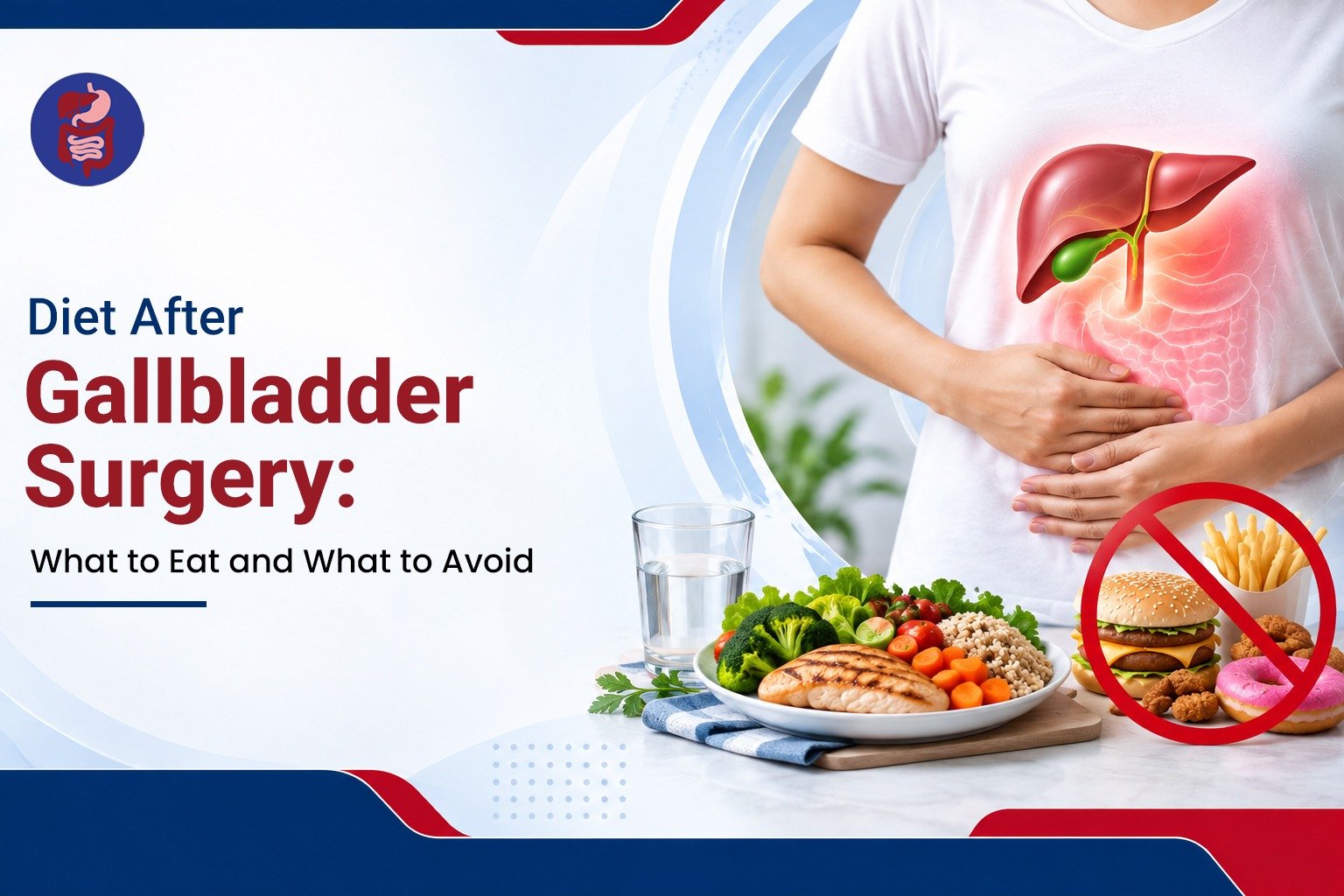
You should follow a low-fat diet after surgery for gall bladder. Some of the most common low-fat foods for after gallbladder surgery are:
- Lean proteins such as chicken, fish, dal and tofu
- High-fibre fruits and vegetables
- Low-fat dairy products
- Whole grains such as oats and brown rice
- Stay hydrated with plain water throughout the day
Some of the above foods are raw ingredients, cook them with low-fat recipes. If you have questions regarding specific food tolerances, schedule a consultation & appointment to discuss a personalised plan with a gastronomical specialist.
Which Foods to Avoid After Gallbladder Surgery?
You should avoid any food that is fried or greasy in the first three weeks after gallbladder surgery. Adhering to a strict diet after gallbladder surgery by steering clear of items high in saturated fats will help prevent post-operative digestive distress. The following list presents some more specific foods that you should avoid:
- Red and processed meat
- Fried foods and greasy meals
- Full-fat dairy and cream-based dishes
- Spicy food
- Carbonated drinks and alcohol
Does Gallbladder Surgery Diet Cause Weight Changes?
A gallbladder surgery diet does not cause major weight changes. Your weight may change due to the amount of food you eat and your physical activity levels following your gallbladder stone surgery. If you experience a sudden weight gain or loss, then consult your doctor.
Doctor Insight Box
After gallbladder surgery, you should pay close attention to changes in your body. Some of the normal post-op symptoms are bloating, mild abdominal discomfort, gas and temporary loose stools. The red-flag symptoms of post-gallbladder surgery are persistent vomiting, severe or worsening abdominal pain, fever, yellowing of the skin or eyes, increasing abdominal swelling or worsening symptoms. If you experience any of the red-flag symptoms, reach out to your doctor without further delay.
FAQs
1. Do I need to follow this diet for life, or only for a few months?
Diet changes after gallbladder surgery are suggested for the first few weeks. After 3 or 4 weeks, you can have your regular meals as per your doctor’s recommendations.
2. Can I eat spicy or oily food again once I’ve recovered?
Yes, you can have spicy or oily foods once you recover from the surgery. But having these foods on a regular basis is not recommended on a daily basis.
3. Why does fatty food cause diarrhoea after gallbladder surgery?
Diarrhoea resulting from consumption of fatty foods after gallbladder removal occurs due to the constant dripping of bile from your liver to your intestines since the gallbladder is no longer present. The lack of regulation of bile in your body leads to high-fat meals passing out of your body too fast, leading to loose stools.
4. Is weight gain common after gallbladder removal?
Weight gain is not common after the removal of the gallbladder. If you have gained some weight, it is recommended that you see your doctor. Focusing on lean proteins and fibre can help stabilise your metabolism as your digestion adjusts.
5. When can I go back to a completely normal diet?
You can go back to your diet 3 – 4 weeks after gallbladder removal surgery. The actual timeline may vary depending on the individual, so you should confirm it with your doctor. This gradual reintroduction helps you identify if specific items still trigger mild symptoms like bloating.
6. Are there any foods I should avoid permanently?
There are no specific foods suggested for permanent avoidance post gallbladder removal surgery. But you should continue limiting oily and greasy foods.
About Dr. Lokesh Yadav
Dr. Lokesh Yadav is a DNB-qualified Surgical Gastroenterologist in Jaipur, Rajasthan, with more than 10 years of experience. His specialisation includes hepatopancreatobiliary, gastrointestinal and GI oncology surgery, with expertise in laparoscopic and open procedures. He consults and operates at CKS Hospitals, Jaipur.
All of these aspects place him as the best laparoscopic surgeon in Jaipur. Currently, Dr. Lokesh Yadav consults and operates at CKS Hospitals, Jaipur.
Conclusion
You should follow a smaller, lighter, meal-focused diet after the gallbladder surgery. Later, you may gradually include more foods as your digestion settles. Choose lean proteins, whole grains, fruits, vegetables and low-fat dairy, while limiting fried and very fatty foods during early recovery. You do not usually need lifelong dietary restrictions, but foods that repeatedly cause diarrhoea, bloating or discomfort may need to be limited. Recovery differs from person to person, so persistent or concerning symptoms should be assessed by your surgeon.
If you are experiencing any gastrointestinal symptoms or need diet recommendations, book a consultation with Dr. Lokesh Yadav today.