
What steps make surgery safer and recovery easier? A safe surgery is the perfect match of three things: properly followed hospital safety protocols, pre-operative preparation and adherence to the post-operative guidelines. When you look at Laparoscopic Surgery vs Open Surgery, a 2025 meta-analysis of more than 3,400 patients has found that laparoscopic procedures reduce hospital stay by about 6 days, when compared with 8 days of open surgery.
So, is laparoscopic surgery the future of medical procedures? As per the experiences of Dr. Lokesh Yadav, the best laparoscopic surgeon in Jaipur, this blog explains when open surgery or laparoscopic surgery is used and how each of them helps in recovery.
What Is the Difference Between Laparoscopic and Open Surgery?
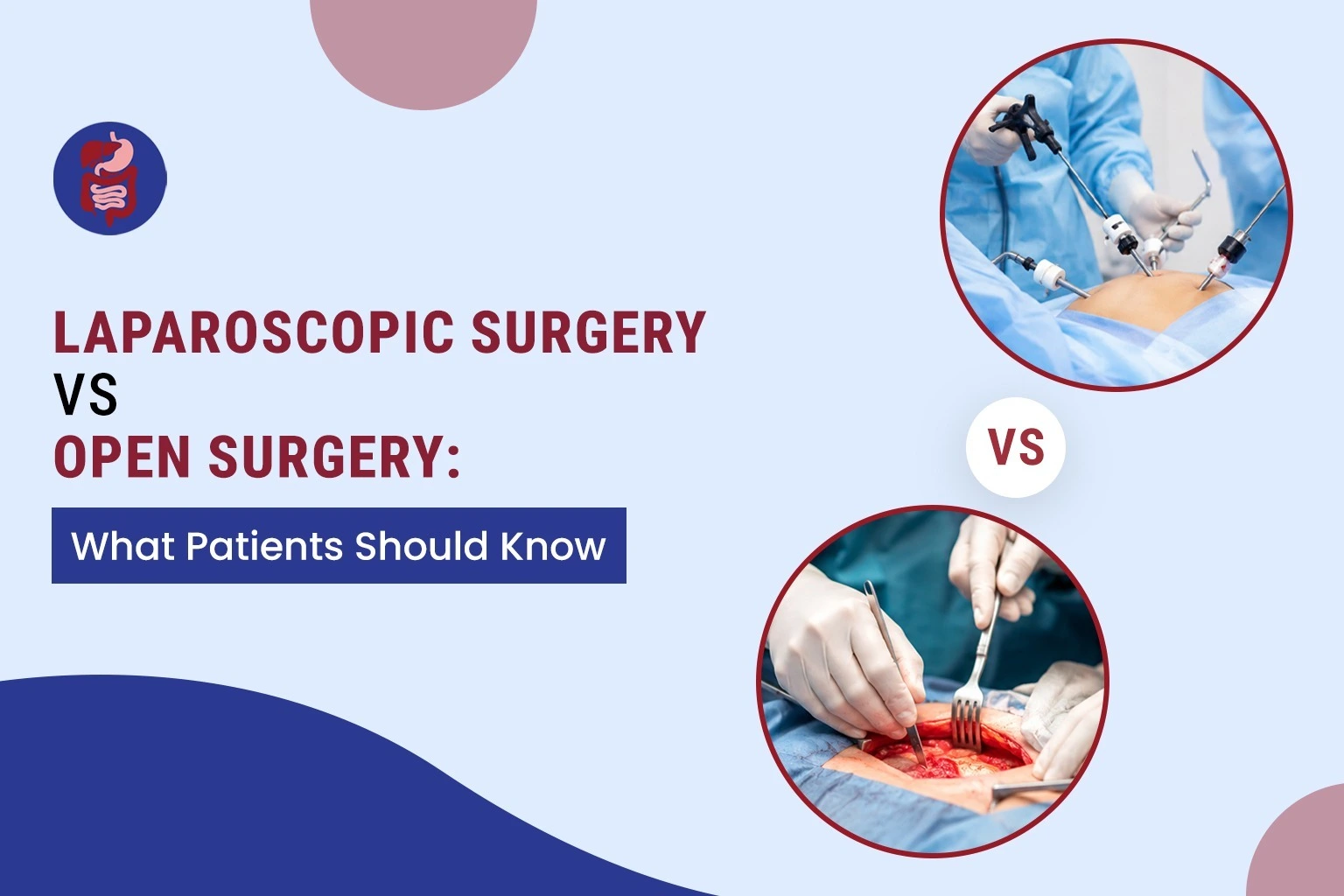
The main difference between laparoscopic surgery and open surgery is the size of the incision used during the treatment. The following is a brief look at each of them:
How Does Laparoscopic (Keyhole) Surgery Work?
In laparoscopic surgery, also known as keyhole surgery, surgeons make several small cuts to place a tiny camera (laparoscope) along with special surgical tools. This type of surgery as well as recovery is done faster compared to open surgery.
How Does Open Surgery Work?
As the name suggests, open surgery means surgeons make a single, larger incision to get direct access to organs, bones and tissues. This procedure is often preferred for organ transplants or to treat severe trauma. Sometimes, patients may experience a longer open surgery recovery time since there is a larger cut than laparoscopic surgery.
What Are the Benefits of Laparoscopic Surgery?
Some of the main laparoscopic surgery benefits are smaller cuts, less post-surgery pain and faster recovery.
Smaller Incisions, Less Pain
Because the cuts are small, patients feel less pain around the surrounding muscles and tissues post-surgery. Upon the doctor’s prescription, having a few painkillers and applying ointments provides relief from post-surgical pain within a few days.
Shorter Hospital Stay and Faster Return to Work
As you heal faster, the hospital stay period also significantly reduces. For most patients, laparoscopic surgery recovery time stays between one and two days of inpatient care and they are able to return to work within a few days.
At a glance: Laparoscopic Vs Open Surgery Pain:
| Factor | Laparoscopic Surgery | Open Surgery |
| Incision Size | A few cuts, usually under half an inch | One large incision |
| Pain Level | Mild to moderate | Moderate to high |
| Hospital Stay | Often 1–2 days | Around 4–7 days |
| Recovery Time | 1–3 weeks | 4–6 weeks or more |
| Scarring | Tiny, barely visible marks | One long, prominent scar |
When Is Open Surgery Still Necessary?
In some conditions, open surgeries are still performed in the most effective way. Here are some conditions that help you know when is open surgery necessary for treatment:
Complex, Advanced or Emergency Cases
To treat advanced cancers that spread to nearby tissues or large tumours, open surgery gives surgeons better control to treat the condition. Open surgery also requires inserting large orthopaedic implants or repairing highly fragmented, complex fractures safely.
Extensive Scar Tissue From Previous Surgeries (Adhesions)
Patients who have had multiple abdominal operations may develop scar tissue that is also known as adhesions. This condition makes keyhole surgery difficult and less effective. To treat such conditions, open surgery lets the surgeon work carefully around the scarred tissues and reduces the risk of injury.
Doctor’s Insight
Open surgery is often preferred by doctors when there is a need to treat a large tumour, an emergency situation or dense scar tissues from previous surgeries. During these procedures, the medical team’s priority is safety and control.
Which Surgeries Can Be Done Laparoscopically?
Some of the common procedures that can be done laparoscopically are Gallbladder, Hernia, Appendix and Liver surgeries. Here is a brief look at each of them:
Common Procedures
The following are three of the most common procedures performed via laparoscopic surgery:
- Gallbladder Stone Surgery: In this surgery, the gallbladder is surgically removed from the body to alleviate pain and prevent complications. Gallbladder stone surgery is performed through both laparoscopic surgery and open Cholecystectomy. Laparoscopic Cholecystectomy is a standard keyhole approach using 3 to 4 tiny cuts, a small camera and special tools. On the other hand, in an open cholecystectomy, surgeons make a large abdominal cut to remove the gallbladder.
- Hernia Repair Surgery: This surgery requires the surgeons to repair the weak muscles in the abdomen by closing and protecting it with mesh so as to avoid future recurrence of the hernia. A hernia repair surgery relieves an individual from sharp pain, continuous aching, or burning sensations that happen because tissues press through the muscle walls.
- Appendix Surgery: In this type of surgery, the inflamed or infected appendix is surgically removed from the intestine. Appendix surgery is a standard procedure to treat appendicitis (An inflammation or infection in the appendix) to prevent it from bursting, which may cause a life-threatening infection.
Advanced Laparoscopic GI and Liver Surgeries
Laparoscopic surgeries can also be done for some complicated digestive system-related problems. Some of these procedures include:
- Advanced GI Surgeries: These procedures treat tumours or blockages in the stomach and colon. In particular, Advanced GI surgeries are performed with robotics, laparoscopy and advanced endoscopy for treating complex conditions of the stomach, liver, pancreas, bowels, among other digestive organs.
- Pancreatic Cancer Surgery: Surgeons remove pancreatic tumours from the patient’s body through this surgery. It is a complex procedure and may take between 4 to 12 hours to complete. Pancreatic cancer surgery has three types, which are Whipple Procedure (Pancreaticoduodenectomy), Distal Pancreatectomy and Total Pancreatectomy.
Is Laparoscopic Surgery Safe? What Are the Risks?
Yes, laparoscopic surgery safety is strong in both common procedures and advanced laparoscopic conditions. Along with that, laparoscopic procedures have some complications like any other surgical procedures.
General Safety and Success Rates
The success rate of laparoscopic surgery is high when performed by an experienced surgeon. Most of the patients recover from the disease without any major issues and there is a lower chance of wound infection than with open surgery.
Possible Complications and Conversion to Open Surgery
As with different types of surgery, the possible laparoscopic surgery risks are minor bleeding, infection or injury to the nearby organs. If you experience severe pain or high fever, contact your surgeon without any delay.
What Is the Cost Difference Between Laparoscopic and Open Surgery?
Laparoscopic surgeries typically have a higher upfront cost than open surgeries because advanced equipment is used for the surgery. However, the laparoscopic surgery cost in India may be offset by a shorter hospital stay and faster recovery.
Factors That Affect the Cost
The four main factors that affect the cost of surgery are: type of procedure, the surgeon’s experience, the hospital category and the length of stay. In some instances, anaesthesia, pre-surgery tests and medical complications can increase the overall cost of the treatment.
Is Laparoscopic Surgery Covered by Insurance?
Most insurance policies cover the laparoscopic surgery cost in Jaipur, as this treatment is widely medically recognised. However, read your policy details to confirm the availability of this feature.
Approximate cost comparison
| Surgery Type | Approx. Laparoscopic Cost | Approx. Open Surgery Cost | |
| Gallbladder Stone Surgery | ₹50,000 – ₹1,00,000 | ₹80,000 – ₹1,50,000 | |
| Hernia Repair Surgery | ₹45,000 – ₹1,50,000 | ₹25,000 – ₹1,50,000 | |
| Appendix Surgery | ₹40,000 – ₹1,20,000 | ₹25,000 – ₹60,000 | |
Recovery Timeline: Laparoscopic vs Open Surgery
The laparoscopic surgery recovery time often stays between one to three weeks. While recovery from open surgery may take four to six weeks or sometimes it may take a bit longer.
Laparoscopic Recovery Milestones
Most patients are able to sit independently and begin walking within a few days. Some light regular activities can be resumed within a few weeks and patients may return to day-to-day work within one or two weeks.
Open Surgery Recovery Milestones
The open surgery recovery time may be longer since the incision is larger. After the surgery, patients may need to stay in the hospital for several days, need more rest at home and recovery may take about four to six weeks.
Recovery checklist of Laparoscopic Surgery vs Open Surgery
| Timeline | Laparoscopic Surgery | Open Surgery |
| Week 1 | Home within 1–2 days | Still in hospital or resting at home and needs stronger pain relief |
| Week 2 | Back to light work and daily activities | Moving more comfortably, but heavy activity still restricted |
| Week 3–4 | Near-complete recovery | Gradual return to work, but full recovery still a few weeks away |
Common Myths About Laparoscopic Surgery
Although widely used, laparoscopic surgery is surrounded by multiple misconceptions. Here is how laparoscopic surgery safety debunks the most common myths:
| Myth | Fact |
| Laparoscopic surgery is less effective than open surgery | Success rates are comparable for most procedures |
| It isn’t safe for complex or serious conditions | Many advanced surgeries are done laparoscopically by experienced surgeons |
| Keyhole surgery takes much longer to heal | Recovery is usually faster |
| It is only for minor procedures | It is used for a wide range of routine and advanced operations |
How Do Surgeons Decide Which Approach Is Right for You?
The surgeon puts high emphasis on the patient’s current condition, medical history, whether they are taking any medication or the complexity of the procedure. Along with that, they may also ask some procedure-related questions.
Factors Your Surgeon Evaluates
Before letting you to the operating theatre, the doctor evaluates the following factors:
- The type, size and stage of the condition being treated
- The patient’s age, overall health, and fitness for anaesthesia
- Any previous surgeries or scar tissue (adhesions) in the area
- Whether the case is planned or an emergency
Questions to Ask Before Your Surgery
Some of the main questions to ask your surgeon are:
- Which approach do you recommend for my condition, and why?
- What are the specific risks in my case?
- What will my recovery and hospital stay look like?
Author Section
This article is medically reviewed by Dr. Lokesh Yadav, one of the leading GI and laparoscopic surgeons in Jaipur with over 10 years of experience. He specialises in advanced gastrointestinal, liver, pancreas, gallbladder, hernia and bariatric surgery.
FAQs
1. Is laparoscopic surgery always better than open surgery?
It depends on the condition. Sometimes laparoscopic surgery gives better results and sometimes open surgery is the most effective option.
2. How long does laparoscopic surgery take compared to open surgery?
The laparoscopic surgery may take between 30 minutes and 60 minutes.
3. Is laparoscopic surgery more expensive than open surgery?
Yes, it is slightly higher because advanced medical equipment is used for the procedure.
4. How much pain is normal after laparoscopic surgery?
Patients may experience some slight pain during the post-recovery period.
5. Can every surgery be done laparoscopically?
No, many procedures require open surgery.
6. What happens if laparoscopic surgery needs to convert to open surgery?
In this condition, the surgical team makes a larger abdominal incision to complete the operation safely.
7. How soon can I return to work after laparoscopic surgery?
You can get back to work in 2 or 3 weeks post-laparoscopic surgery.
8. Are the scars from laparoscopic surgery permanent?
Laparoscopic surgery scars may remain permanently as the skin does not regenerate perfectly.
9. Is laparoscopic surgery safe for elderly or high-risk patients?
Yes, laparoscopic surgery is safe for senior citizens and high-risk patients.
Conclusion
The choice between laparoscopic surgery and open surgery comes down to the suitability for the patients. For most patients, keyhole surgery works perfectly, while some need open surgery. To understand which surgical approach is right for you, book a consultation with Dr. Lokesh Yadav today.